
We want to take a moment to share an important update from the American Academy of Pediatrics (AAP) that has direct implications for how schools approach student technology use.
Recently, the AAP released its most significant update on children and digital media in over a decade. The key takeaway is a shift away from viewing “screen time” as a simple measure of minutes per day and toward a more comprehensive understanding of how digital environments impact student development.
The research makes several important points:
There is no single, one-size-fits-all screen time limit that applies to all students. Instead, guidance should be individualized based on age, development, and context.
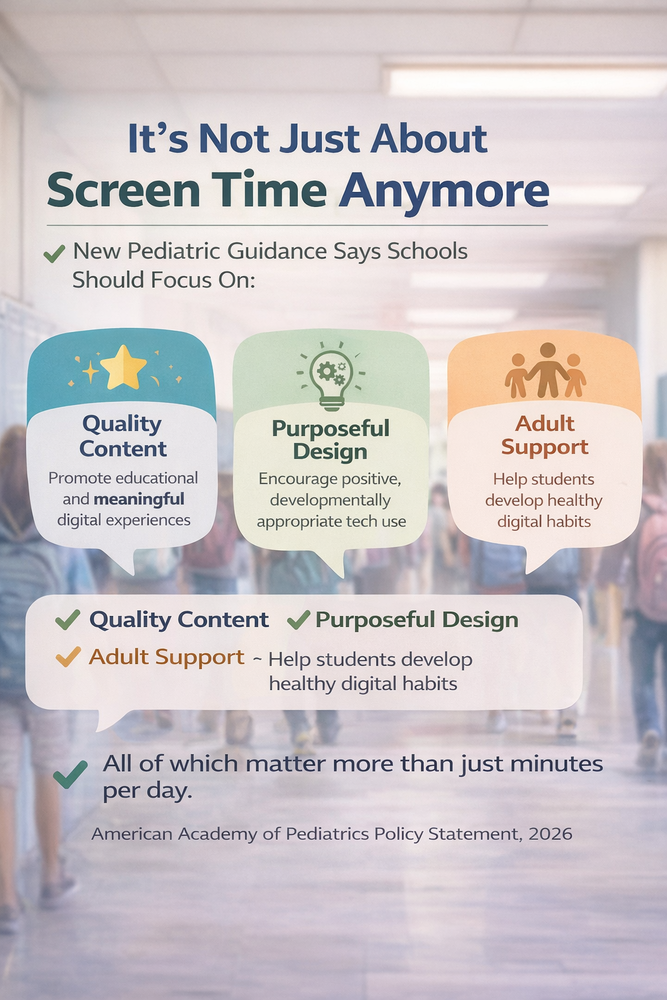
What matters most is not just how much time students spend on devices, but:
the quality of the content
the purpose of use
whether use is supported by adults
and whether it is displacing critical needs like sleep, relationships, physical activity, and learning
Digital tools designed with educational and developmental goals can support learning and well-being
Conversely, platforms designed to maximize engagement and attention can contribute to overuse and negative outcomes
Importantly, the AAP emphasizes that this issue cannot be addressed through student behavior or limits alone. It is a broader systems issue involving design, education, family support, and school practices.
For schools, the guidance reinforces a balanced and intentional approach:
Prioritizing high-quality, purpose-driven use of technology
Teaching students digital literacy and self-management skills
Creating environments that minimize distraction during learning
Supporting families in developing healthy habits at home
This research aligns closely with our district’s current approach. Rather than pursuing broad bans, we are focused on helping students develop the skills and habits necessary to use technology responsibly and effectively → skills that are essential for their success in both academic and real-world settings.
Our goal remains the same as it’s been for over a decade: to ensure technology is used with purpose, not by default, and that it enhances, not replaces, meaningful learning experiences.